
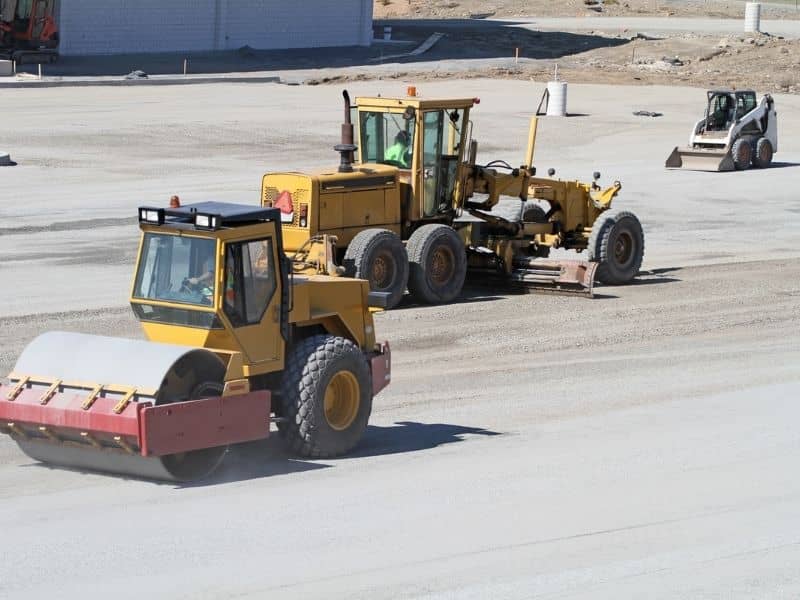
A truck court takes more punishment than almost any other paved surface on a commercial site. Loaded tractor-trailers brake, turn, idle, and park in the same spots every day, and each move pushes heavy stress into the ground. When the soil below can’t carry that stress, ruts, cracked slabs, and standing water show up long before the pavement should wear out.
Soil engineering is the part of civil engineering that studies how the ground acts under load and how to prepare it to carry that load. For truck courts, it often decides whether the pavement lasts for decades or needs patching within a few seasons. The main takeaway is simple: test the soil early, build a strong subgrade, move water away fast, and plan for upkeep before the first truck rolls in.
Evaluating Soil Conditions Before Truck Court Construction
Every good truck court starts with a geotechnical investigation and soil testing. A geotechnical engineer drills borings or digs test pits across the site, collects samples, and runs lab tests to learn what the soil is made of and how strong it is. Those results guide nearly every design choice that follows, from pavement thickness to drainage layout.
The report should cover a few key items:
- Soil type, such as clay, silt, sand, or gravel
- Moisture content and how the soil reacts to wetting and drying
- Bearing strength, often shown as a California Bearing Ratio (CBR) value
- Groundwater depth, plus any soft, organic, or old fill layers
Clay-heavy soils need extra attention at this stage. Many clays swell when wet and shrink as they dry, and that movement can crack pavement from below. Silty soils can also lose strength fast once they soak up water, so these findings should shape the design well before grading starts.
Preparing the Subgrade for Heavy Vehicle Loads
The subgrade is the native or imported soil that sits right under the pavement layers. It acts as the foundation for the whole truck court and supports every layer placed on top of it. A weak or uneven subgrade will eventually show through even a thick concrete slab or asphalt section.
Site preparation usually begins with stripping topsoil, roots, and organic material, since these break down and settle over time. Crews then proof-roll the exposed subgrade with a loaded truck or heavy roller to find soft areas. Any spots that pump, rut, or bend under the load get dug out and replaced or treated before work moves ahead.
Stabilization and Compaction
When native soils aren’t strong enough, engineers may call for stabilization. Common methods include mixing lime, cement, or fly ash into the soil, or placing geotextiles and geogrids to spread loads more evenly. The right method depends on soil type, moisture, expected traffic, and project budget.
Compaction matters just as much for long-term performance. Fill goes down in thin lifts and gets compacted to a target density set in the project specs. Field density tests check each lift before the next one is placed, and skipping this step is one of the most common causes of uneven settling in truck courts.
Choosing Materials for Durable Truck Court Pavement
Truck court pavement is usually built from concrete, asphalt, or a mix of both. Each material has tradeoffs, and neither one fits every project. The choice should follow the soil report, expected truck volumes, turning patterns, and long-term maintenance budget.
Concrete handles heavy parked loads well, which is why designers often use it where trailers rest on landing gear or where trucks make tight turns. It resists rutting and fuel spills better than asphalt in many cases. It does cost more up front, though, and it needs well-planned joints to control cracking.
Asphalt is often cheaper to install and easier to repair. It can hold up well in drive lanes where traffic keeps moving at steady speeds. In areas where trucks park or pivot in place, asphalt may rut or shove unless the section is built for those loads.
Under either surface, a crushed aggregate base spreads wheel loads and gives trapped water a way out. Base thickness depends on subgrade strength, traffic levels, and pavement type. A stronger subgrade may allow a thinner base, while weaker soils usually need more depth.
Using Grading and Drainage to Protect the Site
Water is the biggest long-term threat to a truck court. Soaked soil loses much of its strength, and a wet subgrade under heavy wheels will deform quickly. Good grading and drainage keep water off the pavement and out of the layers below.
Surface grading should send stormwater toward inlets, swales, or other collection points without letting it pond. Slopes must be steep enough to drain well but gentle enough for safe truck movement and trailer parking. Your civil engineer will balance these needs with the site layout and any stormwater management requirements that apply.
Subsurface drainage deserves the same level of care. Edge drains, underdrains, and free-draining base materials can catch water before it weakens the subgrade. Sites with shallow groundwater or slow-draining clay often need more drainage than a first site visit might suggest.
Maintaining Structural Performance Under Repeated Truck Traffic
Even a well-designed truck court will wear down over time. Repeated heavy loads slowly fatigue the pavement, and small defects grow when nobody fixes them. A steady maintenance plan protects the owner’s investment and adds years to the pavement’s life.
Owners and property managers should watch for these early warning signs:
- Cracks that widen or spread across slabs
- Missing or worn-out joint sealant
- Ruts in drive lanes or parking stalls
- Water that stays after rain
- Slabs that rock or drop at joints
Routine crack sealing, joint resealing, and inlet cleaning cost far less than full-depth pavement rebuilds. If damage keeps coming back in the same spot, it may point to a subgrade or drainage problem that surface repairs can’t fix. At that point, the best next step is bringing a geotechnical or civil engineer back to look at the site.
Frequently Asked Questions
What is soil engineering in truck court design?
Soil engineering in truck court design means studying the ground and preparing it to carry heavy, repeated truck loads. The process includes soil testing, subgrade preparation, stabilization, and compaction. These findings guide choices about pavement thickness, base design, and drainage. Without this groundwork, even a thick pavement section can fail early.
How thick should truck court pavement be?
No single thickness works for every site. Pavement depth depends on soil strength, truck volumes, axle loads, and whether the surface is concrete or asphalt. A civil engineer figures out the right section using site data and traffic estimates. Using a standard thickness without that analysis can lead to early cracking or wasted money.
Is concrete or asphalt better for a truck court?
Neither material is always better for truck courts. Concrete often suits parking and turning zones where loads sit still or twist the surface. Asphalt can work well in drive lanes and usually costs less to install and repair. Many sites use both, placing each one based on how trucks move through different areas.
Why do truck courts develop ruts?
Ruts usually form when the pavement, base, or subgrade can’t handle repeated wheel loads. Weak or wet subgrade soil is one of the most common causes. Thin pavement, poor compaction, and heat-softened asphalt can also play a part. Finding the real cause is key before choosing a repair.
How often should a truck court be inspected?
Most property owners benefit from inspections at least once or twice a year. Extra checks after heavy rain can reveal drainage problems before they cause serious damage. Inspectors should look for cracks, failed joints, ponding water, and settling slabs. Catching these issues early keeps repair costs lower and extends pavement life.