
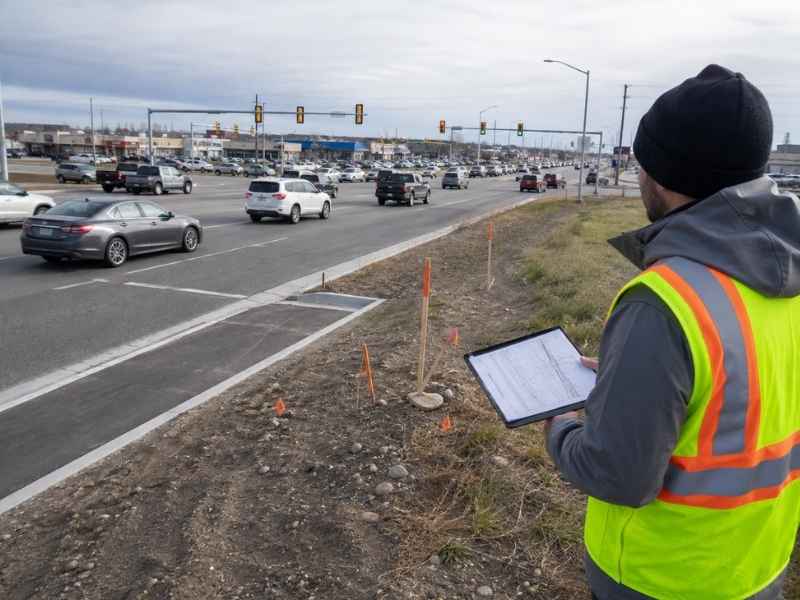
A traffic study does more than count cars going by. It tells engineers how vehicles actually move through an area. That information shapes where a driveway should go. Guess at access placement without this data, and a site can end up with a bad entrance. Cars might back up. Turns might feel awkward. Use the data well, and access planning gets a lot more reliable. This post looks at five kinds of traffic study data that improve access planning. It starts with turning patterns at nearby intersections. It ends with whether one driveway is even enough for a site.
Use Turning-Movement Counts to Locate Better Driveway Access
Turning-movement counts track something specific. How many drivers turn left? How many turn right? How many just drive straight through? This data tells engineers a lot about how a nearby road really behaves. It’s more useful than just seeing how busy a road looks.
A spot with heavy left-turn traffic already might not be the best place for a new driveway. That new driveway would compete for the same turn. A stretch of road with mostly through traffic and few turns can often handle a new access point more easily.
Looking at these patterns before picking a driveway spot helps engineers avoid a common mistake. They can steer clear of areas where turning conflicts already happen a lot. That one choice can make a big difference in how well the entrance works once it’s built.
Compare Peak-Hour Traffic With Proposed Entry Demand
Every road has the busiest time of day. That peak hour matters a lot when planning a new access point. A driveway might work fine most of the day. But it can still cause real trouble if it lands right in the middle of rush hour.
Engineers compare current peak-hour traffic on the road with the traffic the new site will add. How many cars will enter and leave during that same busy window? If those numbers overlap in a way that strains the road, that’s a warning sign. It’s better to fix that before construction, not after.
This comparison doesn’t decide the whole site layout. It answers one clear question. Will this access point hold up during the busiest hour of the day? Or will it turn into a bottleneck once the site opens?
Review Gap Availability for Vehicles Entering or Crossing Traffic
Every stream of traffic has gaps in it. These are moments when a driver waiting to turn or cross can move safely. How often do those gaps show up? How long do they last? Both questions matter a lot at driveways or median openings that don’t have a traffic signal.
If usable gaps are rare, drivers waiting to exit a site can get stuck for a long time. Some might feel forced to take a risky turn just to get moving. This happens most on busy roads where traffic flows steadily with few natural breaks.
Checking gap availability early tells engineers something important. Will a proposed access point actually work the way drivers expect? A driveway can look fine on a site plan and still struggle in the real world. That happens when there simply aren’t enough gaps to use it safely.
Identify Queue Patterns That Could Block Commercial Entrances
A driveway can meet every measurement rule and still work poorly. This happens when traffic queues up nearby spills across it. Cars backed up at a signal or a busy intersection don’t always stay in their own lane once traffic gets heavy.
If a queue often stretches past a proposed entrance, drivers trying to use that driveway can get boxed in. This problem doesn’t show up in a simple measurement of the driveway alone. It only shows up when engineers study how traffic queues form and grow during busy times.
Spotting these queue patterns early gives engineers options. They can move the access spot, or plan around the issue before it becomes a daily headache for drivers using the site.
Use Traffic Distribution Data to Plan More Than One Access Point
Not every site works best with just one driveway. Traffic distribution data shows where vehicles are actually coming from and where they’re headed. That information can answer a key question. Is one entrance enough, or should traffic split between two or more?
A site pulling traffic from both directions on a busy road might work better with separate entrances for each direction. That beats forcing every car through one crowded spot. A site with more focused travel patterns might be just fine with a single, well-placed driveway.
Basing this choice on measured travel patterns, instead of a guess, keeps access planning grounded in how people actually move through the area. It’s not based on an assumption about how they might.
Frequently Asked Questions
What traffic study data is most useful for access planning?
Turning-movement counts, peak-hour volumes, vehicle queues, travel-direction patterns and gap availability all help engineers understand how vehicles will actually enter and leave a property.
How do traffic counts affect driveway placement?
Traffic volumes and turning patterns show which spots offer more practical options for vehicles to enter or exit without adding extra conflicts with existing traffic.
What is gap analysis in a traffic study?
Gap analysis checks whether enough breaks occur in the traffic stream. Those breaks let vehicles safely finish a turn or crossing at a specific access point.
Why are vehicle queues important when planning site access?
Traffic backed up from a nearby signal or intersection can block a driveway. It can also limit turns and make an otherwise well-placed entrance far less useful.
Can traffic study data show whether a site needs multiple driveways?
Yes. Trip distribution, expected volumes, nearby road conditions and access demand can all help engineers decide whether traffic should focus on one entrance or spread across several.